Improper collection can lead to specimens being rejected by the laboratory and patients being rebled, which may cause delays and/or adversely affect patient outcomes and the patient experience. All staff collecting blood should therefore exercise the utmost care during collection procedures.
Ways to minimize rejection rates are provided in the table below:
|
Pitfalls
|
Preventive measures
|
|
Hemoconcentration:
A decrease in the fluid content of the blood, with an increase in protein-based blood components such as red blood cells.
|
- Release the tourniquet within one minute.
- Do not excessively massage the area in locating a vein.
- Do not allow the patient to pump the fist.
- Ask patient to release fist once blood flows.
- Do not probe or redirect the needle multiple times in search of a vein.
|
|
Hemolysis:
Damage or destruction of RBCs and release of hemoglobin into the fluid portion of the blood, causing the serum color to change from pink (slight hemolysis) to red (gross hemolysis) 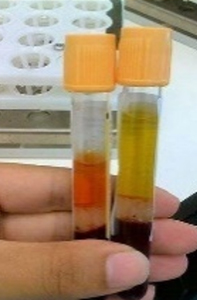
|
- Do not draw blood from a site with hematoma.
- Avoid collection though a VAD or during IV administration.
- If using a syringe for collection:
- Ensure needles fit securely on the syringe to avoid frothing
- Avoid pulling the plunger back too forcibly.
- Avoid forcefully transferring the blood to the tube.
- Do not keep the tourniquet longer than one minute.
- Avoid mixing specimens vigorously.
- Use the proper needle size according to vein size and diameter. Avoid using small gauge needles for large veins and vice versa
- Transport specimens gently, in a vertical position. Avoid shaking .
- Avoid excessive concentration of additives to sample in the tubes caused by underfilling, which can cause rupture of RBC membranes.
|
|
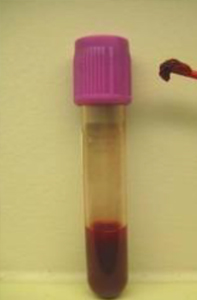
Clotted specimens:
Clotting occurs in a tube containing an anticoagulant.
|
- Fill all blood collection tubes to the fill line.
- Do not overfill tubes
- Ensure adequate tube inversions. Avoid syringe transfer delay in placing the blood into a tube.
|
|
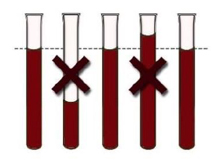
Improperly filled tubes:
Tubes must be filled until the normal amount of vacuum is exhausted. Under-filling/partially filling or over-filling tubes result to incorrect additive –to- blood ratio.
|
- Direct draw into vacutainer tube until it finishes filling to the correct volume.
- Check the tube expiry date. Do not use it if expired.
- Avoid manual filling of the tube (Aliquoting).
- Never pour two partially filled additive tubes together as this will affect blood-additive ratio.
|
|
Specimen Contamination:
Is typically inadvertent and generally the result of improper collection techniques or carelessness.
|
- Follow the correct order of draw to minimize cross contamination of additives between tubes.
- Comply fully with the skin disinfection steps described for collection of blood cultures and other blood specimens.
- If a blood test is required for alcohol levels, do NOT use alcohol wipe to clean the site. Clean with soap and water using a clean gauze.
- All phlebotomy equipment is sterile by manufacture. Do not open the tube cap or open the needle until the time of use.
|