Be prepared for unexpected patient reactions. Report and document all incidents in line with organizational policy, including any exposure to blood/body fluids/infectious materials.
1. Hematoma Formation: Blood leaks into tissue during/after venipuncture.
Causes: Commonly caused by:
- Fragile/small veins
- Needle fully through or partially in the vein
- Needle removed while tourniquet on
- Blind probing
- Inadequate post-draw pressure
Signs: Rapid swelling at or near the puncture site.
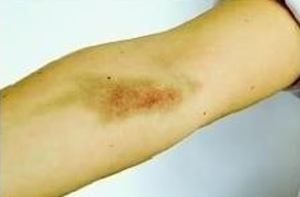
Actions:
- Remove needle immediately
- Apply pressure ≥ 2 mins
- Use cold compress/ice pack
Prevention:
- Remove tourniquet before needle
- Maintain stable needle position
- Remove tube before needle
- Confirm site is sealed before bandaging
- Ask the patient NOT to bend the arm, because doing so causes a hematoma.
2. Accidental Arterial Puncture
Signs: Bright red, pulsing blood or rapid tube fill
Actions:
- Remove needle immediately
- Apply firm pressure ≥ 5 mins
- Notify supervisor/physician & document
3. Dizziness / Syncope (Fainting)
Signs: Pallor, dizziness, lightheadedness, hyperventilation

Actions:
- Stop procedure, release tourniquet, discard needle
- Lay patient flat / recline chair
- Loosen tight clothing
- Monitor until recovery
- Call nurse/physician/Code Blue if unresponsive
- Document as a Phlebotomy adverse reaction
Prevention:
- Never draw blood from standing patient
4.Nausea / VomitingActions:
- Stop collecting immediately
- Reassure patient, provide emesis basin
- Apply cold compress to forehead
- Instruct patients to breathe deeply/slowly
5. Anxiety / Fear
Common in patients with cognitive decline or mental health issues
Actions:
- Explain steps calmly
- Reassure patient throughout
- Use clear, calming communication
6. Excessive Bleeding
Common in patients on anticoagulants (e.g., aspirin, warfarin)
Actions:
- Apply firm pressure until bleeding stops
- Elevate arm above heart level
- If bleeding persists >5 mins, notify physician